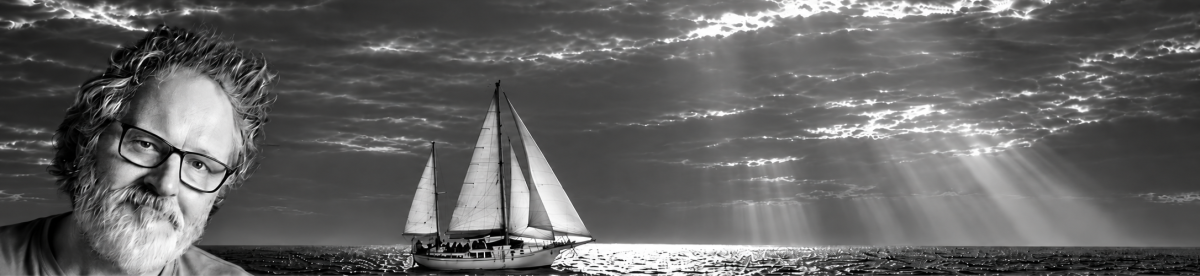
I know I’m probably starting to sound like a broken record, like an annoying salesperson, but man am I excited about this new lifestyle I’ve just discovered! I guess I’ll have negative things to say later but right now it’s all yeeeepeee and yahooo and hurraaaay…
Apart from the delights of our daily life floating on the Caribbean there’s a very important element why we love it here: Alex and I are spending, together, less than 300 dollars a month, living in one of the most beautiful places in the world, in a beautiful boat, enjoying lots of free time, exercise and eating like kings. I couldn’t spend that little even when I was camping sometimes. It really is incredible. The first night we had dinner on the foredeck, under the stars, warm breeze on our face, a glass of red wine, I turned and told him “This is like an American Express commercial. But without the money! You really found a way to trick the system, didn’t you?” He nearly choked laughing.
The thing is, I’ve never envied the people in those commercials. I’ve never liked money. I’m quite particular about it. It has always made me feel like a slave. As soon as I buy something, I have to start taking care of it, make sure it doesn’t break, that I don’t lose it, that it doesn’t get stolen. The more things I have, the more time and energy I need to invest in these objects. I need a place to store them, I need to carry them when I go somewhere, they start owning me. I just keep giving everything away and keep the basic things that I love, which fit in a box. And all the people I’ve met who look like those in the commercials seemed to have stressful lives running their companies and their employees, checking their smartphones during the weekend or at night, getting lots of “important calls”, bank transactions, piles of bills, being afraid of getting robbed. I don’t have a bank account or a cell phone or an employee or a car and I don’t want any of that.
I have often wondered if it was possible to live without using money at all, I did some research on eco-towns and communities who use it only to a minimum extent but did not think it would be right for me, I am always on the move, I would have been a tourist there too.
This has nothing to do with sailing, though. It’s a choice that you make no matter where you are. I’ve always tried to work as little as possible to have a simple life with lots of free time and little stress. I worked only to pay for those things I considered important: a small nice flat as empty as possible, cinema, concerts, wine, chocolate, martial art classes, bus or plane tickets to go somewhere. But then most things I loved were free: visiting friends and family, drawing, going for a hike or a cycle in the mountains, a camping trip to a lake during the weekend, a walk around the city in the rain, having friends over for dinner, dancing with them at some small underground club, having some off-road adventures in a friend’s jeep, reading a book, playing the guitar…
I have never liked service either, I don’t like the idea of people working for me, I love to learn and do things myself much better. I like simple things, I’m not a fan of taxis, hotels or restaurants. Even when I was living and working in the city I loved taking buses, I would finish a novel in two weeks, I read on my way to the bus stop, waiting for the bus, during the whole ride, and walking to my destination, no distractions. It’s funny, I can actually read while I walk, I have a lot of training. Sometimes I’d be late to work because I just could not stop. And if I was going somewhere less than 2 or 3 miles, I would walk and look at the scenery. When I was out of the house at lunch I would never sit at a restaurant. I would always have my own water in the bag, find a little vegetarian take-away and eat at a park while I watched the birds, listened to music or read some more. I would sometimes even take a little nap and set an alarm for whenever I had to go back to work. I like being outside in the sun and around the other people who sit at parks and look at the birds. I keep telling Alex that my life on land was easy and beautiful. I worked few hours, had long holidays, great friends and a hundred hobbies.
So, even before I ever found out anything about sailing I was already living the same hippie natural lifestyle. The problem was that I still had to work for someone else on a regular basis. In a city, no matter how hippie you are, you have rent, bills and taxes. If you are more of a money person then you have to multiply your responsibilities and obligations exponentially. If you’re a traveler like me, you have to save a bit before you can take off. Traveling without money is absolutely possible, you can hitchhike or use programs like Couchsurfing or Wwoof, I’ve done it and know many people who have as well, it’s a wonderful experience, with its ups and downs like everything else. But there is always the discomfort of not being able to choose where to sleep, having to share sometimes with people you don’t like, not being able to choose where you wanna go but rather go where people take you, things like that. You need to make a good amount of money to save to go traveling.
Now, when you choose to move to a boat this changes right from the start: you can have no expenses other than food, you can still travel as regularly as you want to, but you get to sleep in your own bed every night, alone or with your favorite people. Owning a sailboat is not a big deal either, it can be much cheaper than an average car. And then you can live in a free anchorage in most countries, get a cruising permit for the year, which is not so expensive, and you’re sorted.
And, as you have no services (running water, natural gas, cable TV, etc.), you have no bills. You’ve got no commitments with any company or corporation.
If you’re clever with water, it can be free. A tank of gas for the stove is 5 dollars in the city (around 20 if you don’t want to move from the anchorage) and it lasts us for five or six months. We all have pay-as-you-go sim cards, if we got money, we talk. If we run out or want to use it for something else, we don’t. Internet is 15 dollars a month. And as for cable TV, we have no interest in it. All cruisers have got huge film and TV series collections and we exchange them often. So there’s always something cool to watch when we feel like it. We get together with friends here or on their boat and have a movie night with popcorn, beer for the boys and wine for the girls under the moonlight. We snorkel together, the boys go spear-fishing, we swim, we cook for one another, exchange books and recipes and we travel the world in our homes. We certainly do not feel like we are missing out on anything other than stress.
Yachties also need to do some kind of work of course but the difference is that we do it when we need to and independently. Some captains do deliveries (bring other people’s boats from one place to another) and many boats charter (bring passengers from one place to another). These two options leave good money, you don’t need to do it very often and you can get by. Other people in our community sew (cushions, sails, sail covers…), do mechanical work for other boats, teach languages or do some work online (in my case, I do translations for a news agency twice a month, our neighbor is an architect and works a lot through email as well).
But there is really no need to work too hard because there is not much to spend your money on. We mainly do groceries and buy fuel for the dinghy. Our other expenses are usually related to fixing something on the boat (parts, screws, bolts, paint, brushes, wire, etc.) and if you do things yourself it doesn’t really mean that much money either. The difference is shocking, just to give an example: having your hull painted professionally can cost around 6,000 dollars, we will do it ourselves and we will spend 300 on the paint we need. Sure, it won’t look as shiny, and it will take us a couple of days, but, here lies the basic question again. What things are really important to you?
You don’t need to live on a boat to be free from banks, debt, out-of-hand consumption and brain-wash. Back home in the Patagonian mountains, many young people in their 20s or 30s are buying a small piece of land with no services and learn how to grow their own vegetables, and cereal, buy a few chickens for eggs, pigs for meat and get fish from the rivers and lakes. They get the cleanest drinking water from the streams, make firewood from their backyard, build their own homes gradually. They only need to work now and then to buy clothes, to travel, etc. And they have children who have lots of room to play, no TV but lots of children’s films, no videogames but bicycles, building blocks, drums and kites. (Alex says that if for any reason he had to live on land, he’d be heading straight for the Patagonian mountains)
These are often strange times to me. There are people who work all day and use nearly their whole salary to pay for a nanny, who ends up raising their children. Wouldn’t you rather be home with them and watch them grow?
Even if you feel living in nature is a bit extreme for you and you like the city, if you feel you are working too hard, worrying too much or part of a system you don’t agree with there’s plenty you can do. Start little by little. Stop paying for things that are not important to you. Work less. Walk. Spend more time with your loved ones. Cook your own meals. Turn off the TV and get out of the house. Start doing all those fun things that are free. Get closer to people who also want to go back to a simpler life. Don’t wait until you retire to have free time and sleep like a baby. Start “retiring” now : )
Note: Soon we’l start sharing our “Splendid recipes”, lovely meals we are preparing with very little money and the basic ingredients that don’t go bad on a boat without refrigeration.